The biggest myth in dog ownership is "the tail was wagging, so he was happy." A wag means arousal, not joy, dogs wag before play, before fear, and occasionally before a bite. The information is in the details: height, speed, and what the rest of the body is doing.
The tail, decoded
| Tail | Usually means |
|---|---|
| Mid-height, sweeping wag, loose hips | Genuinely relaxed and friendly |
| Helicopter wag (full circles) | Delight, usually reserved for favourite people |
| High and stiff, fast tip-vibration | High arousal, on alert, not an invitation |
| Low, slow wag | Uncertain, appeasing |
| Tucked under | Scared, give space, remove pressure |
Breed sets the baseline: a husky carries high by default, a whippet low, and a shih tzu's plume tells you little until you know their personal neutral. Learn your dog's baseline first.
Calming signals, the polite whispers
These are the small de-escalation moves dogs offer when mildly uncomfortable. Spot them early and you'll rarely see the loud stuff:
- Lip licking with no food around
- Yawning when not tired, a classic stress valve
- Looking away / head turn from what's bothering them
- Sudden ground sniffing mid-interaction, "I'm no threat, I'm busy"
- Shake-off (wet-dog shake while dry), a reset after tension passes
See a cluster of these while a toddler hugs the dog or during nail trims? That's the dog politely asking for help. Answer politely and they never need to shout.
The warnings people miss
Whale eye, head turned away but eyes fixed on the threat, whites showing, is one of the last requests before a growl. Freezing, a suddenly still dog over a bone or in a hug, is the other. And the growl itself is not disobedience; it's information, generously given. Punish the growl and you delete the warning, not the feeling, that's how "he bit without warning" stories are made.
The guilty look isn't guilt
The lowered head and sideways ears when you find the shredded cushion? Studies have shown dogs offer that look in response to your body language, whether or not they did anything. It's appeasement, "you seem angry, please don't be", not a confession. (If the shredding happens only when you're out, read the separation anxiety guide instead.)
Play signals, for balance
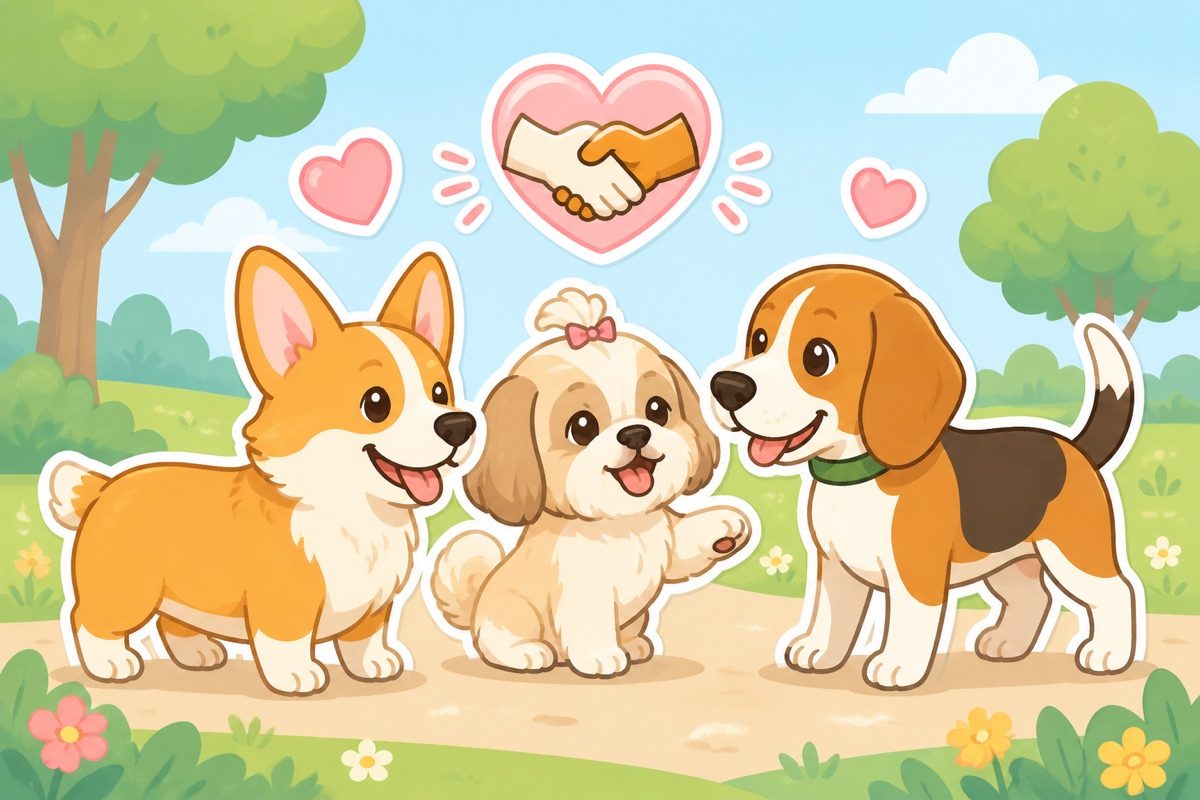
The play bow, front down, rear up, loose face, is a genuine invitation, and the mutual pause-and-restart rhythm of good play is easy to spot once you look. On walks and at the park, two seconds of reading saves most bad encounters: loose and curvy is good, stiff and tall means walk on.